Surgical Mining for Critical Minerals
Advancing critical mineral extraction with sustainable, low-impact, more precise mining methods.
Project Overview
Updated January 26, 2026
The Problem
The clean energy transition is driving unprecedented demand worldwide for critical minerals like copper and rare earth elements (REEs), but supply is not keeping pace. Canada has abundant deposits of both copper and REEs, but new mines take 10 to 15 years to permit and build. As a result, many deposits remain stranded. New mining approaches are needed to access these critical minerals.
How We Are Solving It
Led by Novamera, in partnership with Northstar and Micon, this project is advancing Surgical Mining as a new approach to unlock Canada’s copper and REE deposits.
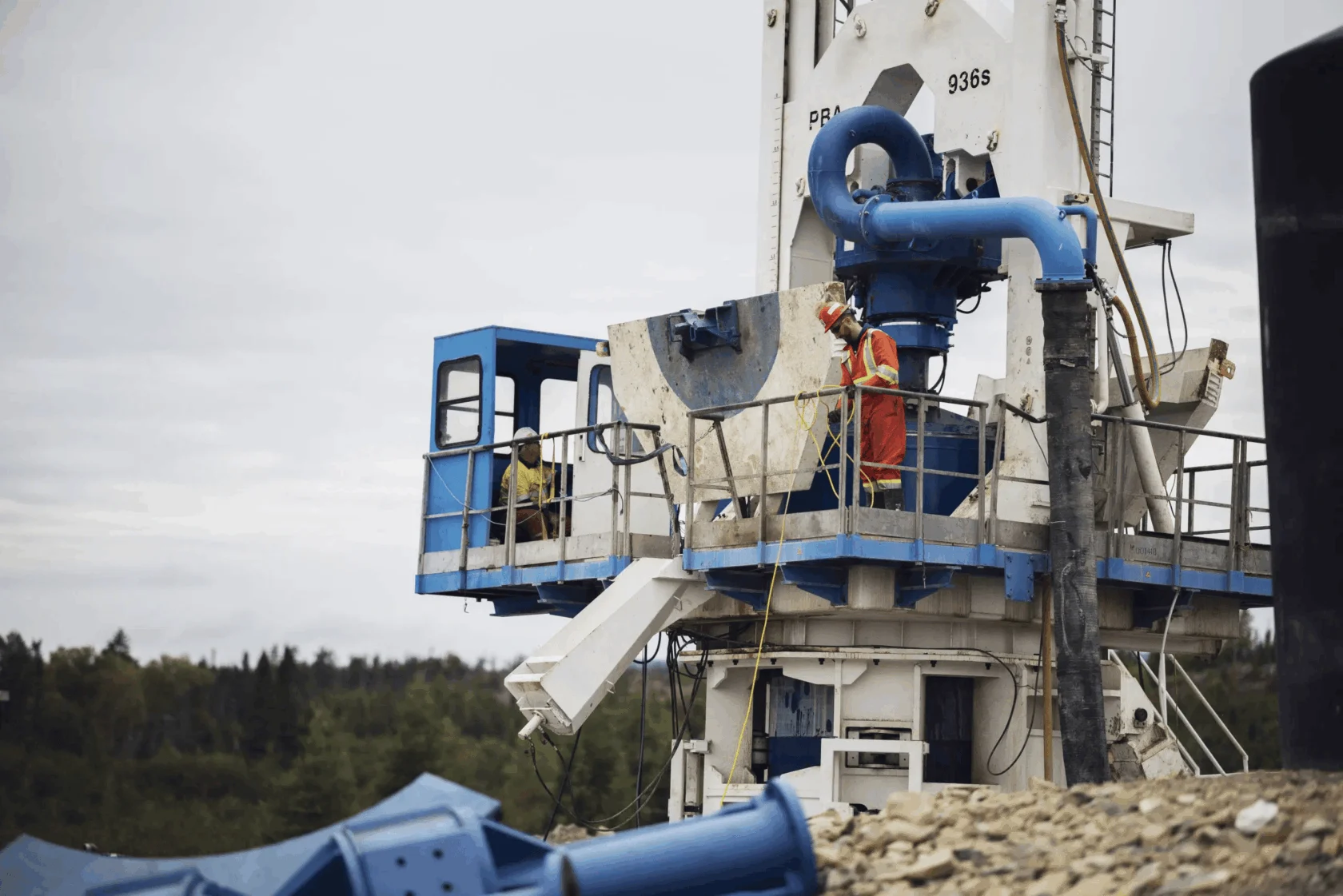
Surgical Mining is a small-footprint, sustainable, and minimally invasive method pioneered by Novamera that involves a combination of advanced software, downhole sensors, real-time orebody modelling, and robotics to target and extract ore directly from surface drill holes. The technology can reach previously stranded, narrow-vein or remote deposits and reduces waste up to 95 per cent. Its minimal environmental footprint and real-time reclamation also provide a new pathway to permitting, potentially cutting timelines from decades to just a few years.
The project partners will now evolve Surgical Mining to access critical minerals. Unlike gold, copper and REE deposits often feature higher conductivity, which complicates orebody delineation, and their processing flowsheets are more complex, which increases costs per tonne.
The partners will develop a new imaging tool with enhanced frequency response and intelligent multi-frequency antenna. The antenna will adjust in real time to local rock and fluid conditions and visualize veins as thin as two to three centimetres. This will offer greater depth penetration, lower the number of required imaging holes, and deliver more accurate orebody geometry to guide extraction design.
An AI-enhanced processing and interpretation pipeline will also be implemented. This smart signal-cleaning pipeline will automatically remove clutter, correct for tool position and drilling fluid effects, and enhance faint reflections that indicate orebodies. As a result, fuzzy, ultrasound-like images will be transformed into crisp, medical-grade visuals that reveal small but high-value deposits.
A third element will be AI-enhanced orebody modelling. Instead of static 2D strip charts, decision-makers will receive a live 3D model showing the size, shape and orientation of veins within minutes of data collection. This will move borehole geophysics from a manual, after-the-fact process to a true decision-support system.
The key to unlocking critical minerals will also be faster permitting and development. Working together with Ontario’s Ministry of Energy and Mines, the partners will apply the Cam Copper project as a testbed to fast-track the regulatory process. Ultimately, this project aims to establish Canada as a leader in critical mineral extraction technology—driving new economic and employment opportunities, strengthening collaboration across the mining ecosystem, and building a globally competitive export market for Canadian innovation.